
Therapy for individuals.

Sometimes it’s hard to enjoy the chapter you’re in. Whatever’s making it hard, something recent, something old, something you can’t quite name, we can help you write what’s next.
Client speaking during a counseling session

Counseling for wherever your story is now.

Whether you’re navigating something recent or something you’ve carried for years, we meet you where you are. Counseling can bring clarity and a deeper understanding of yourself.

Caring for yourself isn’t selfish. It’s what makes it possible to show up for everyone else. Whether you’re carrying trauma, depression, anxiety, family strain, work conflict, life transitions, or a longing for spiritual growth, you don’t have to have it figured out to start. We offer individual counseling in person and online, across North Carolina.
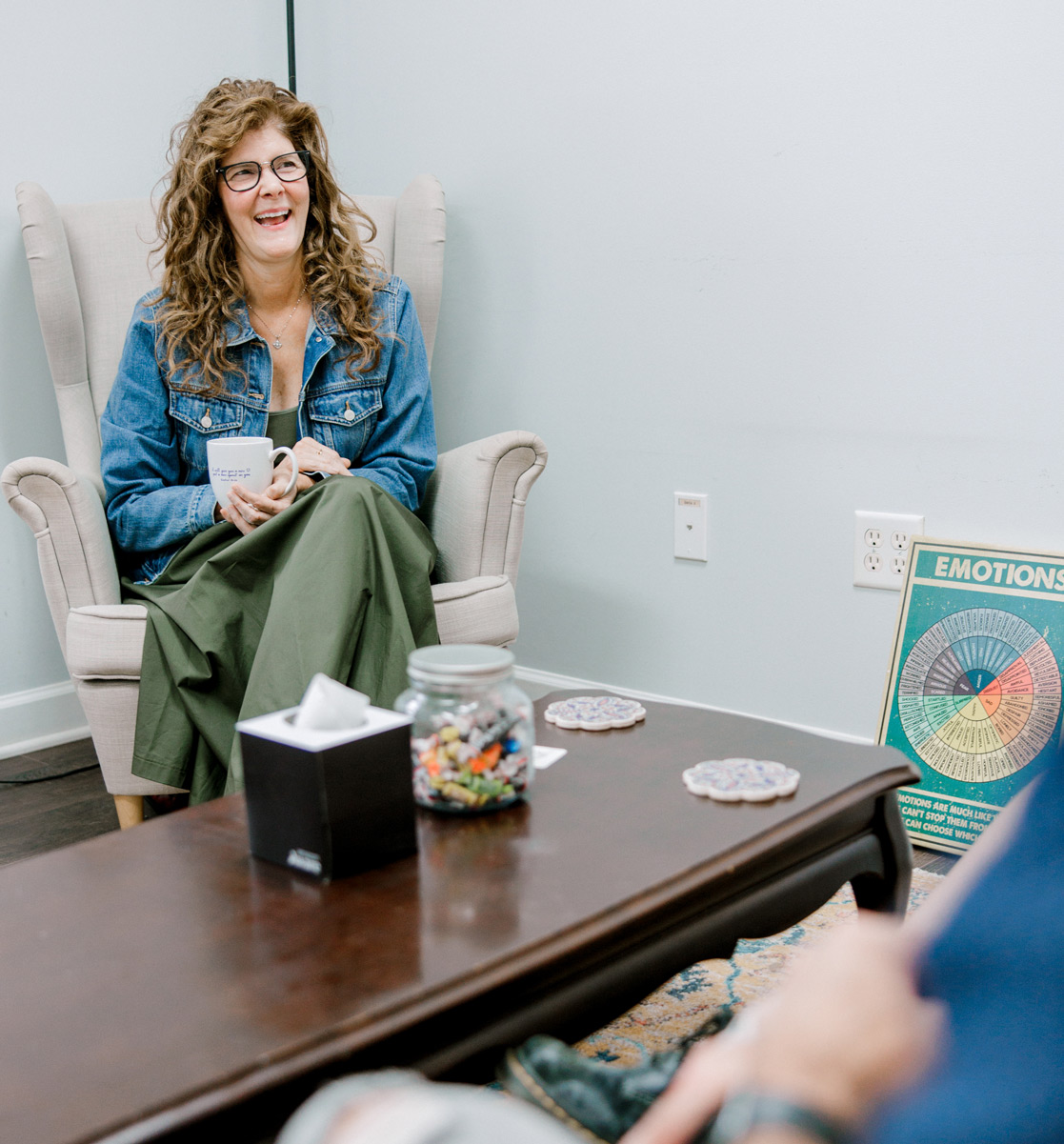
Therapist speaking with a client

How we show up for you.

First, we understand your story. Everyone deserves the chance to tell it and be heard fully. Then we get to work, using the approach that fits you best, and, for those who want it, faith woven into the process itself. Because counseling extends beyond the room, you may practice a new skill, journal, read, or watch something between sessions.

If you’re focused on improving your walk with God, Spiritual Direction can guide you there. Spiritual Direction carries its own rhythm too, with things to think about, read, and pray through between sessions.

Small, steady steps that carry the work forward.

Ways we help you enjoy your story again:

You are not your struggle. Narrative Therapy works from that belief, helping you separate your identity from what you’re struggling with so you can look at it more clearly. Together, we’ll examine the stories you’ve been telling about your life, and where those stories no longer serve you, we’ll help you write new ones.

Start with a free conversation.

Sometimes what feels like an individual struggle is really a pattern playing out across a whole family’s story. Strategic Family Therapy looks at those patterns directly, focusing on practical, solvable steps rather than years of history. It’s a hands-on approach built for real change, not just insight.

Start with a free conversation.

Thoughts, feelings, and behaviors are more connected than they often seem. CBT helps you notice the narrative you’re telling yourself — the thought patterns driving how you feel and what you do — and gives you practical tools to shift them. It’s structured, skill-based work, well suited to anxiety, depression, and the everyday thought loops that keep you stuck.

Start with a free conversation.

Whatever happened is part of your story, but it isn’t your entire story. When a memory stays “stuck,” it can keep showing up in the body long after the moment has passed. EMDR helps your brain do what it’s built to do: process what happened so the memory remains, but its grip loosens. EMDR doesn’t require reliving every detail out loud, and for many people, healing can happen faster than with traditional talk therapy.

Read more or start with a free conversation.

Underneath most conflict is an unmet need for connection and safety. EFT helps you identify and voice that need, so old patterns of distance or defensiveness can be rewritten into real understanding. It’s slower, deeper work, focused on the bond itself, not just the argument on the surface.

Start with a free conversation.

You carry more than one voice inside you. IFS treats those different parts — the protector, the wounded part, the critic — as characters in your story worth understanding rather than silencing. As you build a relationship with each part, healing becomes less about fixing yourself and more about understanding the story each character is trying to tell.

Read more or start with a free conversation.

""
Bookshelf with therapy and mental health resources

When your story turns toward faith.

Not every hard chapter is about diagnosis or crisis. Sometimes it’s spiritual dryness, burnout, or a longing for deeper intimacy with Jesus.

Spiritual Direction creates a safe space with a like-minded person of faith who helps you notice, experience, and respond to His presence in your daily life, and wrestle honestly with spiritual things so you can grow in your relationship with God.

How is Spiritual Direction different from counseling?
Counseling diagnoses and treats specific struggles, trauma, or conflict. Spiritual Direction, while still offering empathy and support, focuses more broadly on your relationship with God and everyday spiritual growth.

How often do I meet for Spiritual Direction?
Sessions are typically once a month for 50 minutes, with things to think about, read, and pray through in between.


""

Your next chapter starts with one conversation.

Whatever you’re carrying, we’re ready to help you turn the page.
""

Your next chapter doesn’t start with having it all figured out. It starts with reaching out.

Taking the first step can feel difficult, but we’re here to listen, support you, and help you write what’s next.